Category: General

  • How Preschoolers Manage Executive Functioning Skills During Occupational Therapy Evaluations

    How Preschoolers Manage Executive Functioning Skills During Occupational Therapy Evaluations

    A data-based look at executive functioning during OT evaluations

    Occupational therapy practitioners often hear some version of the same question:
    “They seemed to do fine with you. Why are they struggling so much in class?”

    To explore this, we examined therapist-rated Executive Functioning collected during one-on-one OT evaluations with preschoolers. These ratings reflect how children worked with the therapist during the evaluation itself, not how they function in classrooms, group settings, or home environments.

    This article focuses on what the data shows and how therapists can interpret these observations responsibly.


    Important context about this sample

    • Children were referred for OT after failing an occupational therapy screening
    • 400+ preschoolers aged 4:0-4:11 , with about equal % of males and females
    • This is a clinically referred preschool sample, not a normative group
    • Ratings reflect performance during a one-on-one OT evaluation
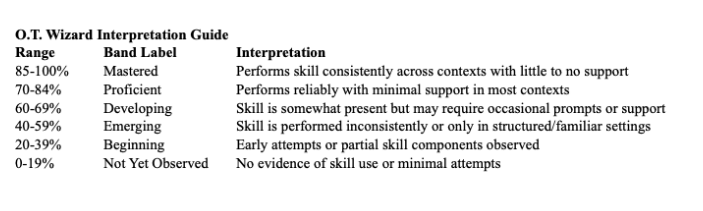
    • Work habits were rated using descriptive anchors:
      • Not present or Beginning
      • Inconsistent or Emerging
      • Developing
      • Proficient
      • Mastered

    What the work habit data shows overall

    Across all work habit areas, most children in this referred preschool sample were rated in the Developing to Adequate range when working one-on-one with an occupational therapist.

    This suggests that many children who struggle in classrooms or group environments are able to participate meaningfully when demands are reduced, expectations are clear, and adult support is individualized.


    How children performed across specific work habit areas
    Transitions and cooperation

    Most children were rated as Developing or Proficient in their ability to transition between activities and cooperate with the therapist during the evaluation.

    This indicates that many preschoolers can adapt well to structured tasks when the environment is predictable and supportive, even if transitions are difficult in other settings.


    Task initiation and task completion

    Task initiation and task completion were commonly rated in the Developing to Proficient range.

    Many children required prompting or encouragement to begin tasks, but were generally able to complete them once engaged. This reflects emerging executive functioning skills rather than refusal or lack of effort.


    Impulse control and task persistence

    Impulse control and task persistence tended to fall in the Developing range.

    Children often attempted tasks and remained engaged for short periods but had difficulty sustaining effort across multiple activities. This pattern is typical in preschoolers and becomes more pronounced when task demands increase.


    Attention during the evaluation

    Attention was the most commonly impacted work habit, even in a one-on-one setting.

    Many children were rated between Emerging and Developing for attention. This is an important clinical signal.

    When a child struggles to attend during a one-on-one evaluation, they will generally struggle even more in larger, less structured settings such as classrooms, group activities, or busy home environments. Difficulty sustaining attention in a low-demand context often predicts greater challenges when environmental demands increase.


    When poor evaluation performance reflects anxiety, not ability

    It is also important to acknowledge that not all low work habit ratings reflect true functional ability.

    Some preschoolers perform poorly during evaluations because they are:

    • Nervous
    • Anxious
    • Overwhelmed by unfamiliar adults or environments
    • Uncertain about expectations

    In these cases, performance may underestimate a child’s true skills.

    Occupational therapists play a critical role in distinguishing between skill limitations and emotional readiness. Establishing rapport is not optional. It is a clinical necessity.

    For some children, establishing rapport may include:

    • Spending additional time building trust
    • Allowing the child to observe before participating
    • Using play or preferred activities to reduce anxiety
    • Delaying formal evaluation tasks until the child appears comfortable with the therapist

    Evaluation data is only as meaningful as the context in which it is collected.


    What this tells us about one-on-one OT evaluations in our 400+ preschool sample

    Taken together, these findings suggest:

    • Most preschoolers in this referred sample can demonstrate Developing to Adequate work habits in a one-on-one OT evaluation
    • Stronger performance in this setting does not negate difficulties in classrooms or group environments
    • Attention difficulties observed in one-on-one contexts often signal more significant challenges in larger settings
    • Anxiety and lack of rapport can temporarily suppress performance and must be considered during interpretation

    Why this matters for interpretation and communication

    These data support a critical clinical message:

    Performance in a one-on-one OT evaluation reflects what a child can do with individualized support, not what they are expected to manage independently in more complex environments.

    When communicating results to families, teachers, and teams, it is essential to clarify the difference between supported performance and real-world participation demands.


    Key takeaway for therapists

    Based on therapist-rated work habit descriptors:

    Most preschoolers in this referred sample demonstrated Developing to Adequate work habits during a one-on-one OT evaluation, while attention and self-regulation remained vulnerable areas, particularly when demands increase or anxiety is present.

    This reinforces the importance of careful interpretation, thoughtful rapport building, and contextualized clinical judgment.

    📣OTPs : Does this match your experience when evaluating preschoolers? Leave us a comment and let us know.

  • O.T. Wizard User Spotlight: A Sole OT/L on School-Based Team working with PreK-Elementary

    O.T. Wizard User Spotlight: A Sole OT/L on School-Based Team working with PreK-Elementary

    From time to time, we invite occupational therapy practitioners whose use of OT Wizard reflects strong clinical reasoning, real-world application, and thoughtful feedback to participate in a spotlight.

    User spotlight with Hailey, OTR/L


    Can you tell us a little about your background as an OTP,  and your work setting(s) ?

    I am currently in my 6th year as an OT and all 6 have been within the school-based setting. I have dabbled in outpatient pediatrics, as well, by my heart is absolutely within school-based delivery.


    Do you have a favorite domain or type of challenge you enjoy treating most? What do you love about it? 

    I would say that visual deficits are my favorite challenge; they’re often easily missed or overlooked, but play such a foundational role in the development of motor skills.


    What does a “normal” day look like for you?

    This year specifically, I am balancing a lot of evaluations and supervision of COTAs (I have an amazing team of COTAs)! I also spend time bouncing between pre-k classrooms and treating a handful of pre-k and elementary aged students.


    How did you hear about OT Wizard? 

    Our school-based therapy team registered for the Learning Charms Conference this past fall. As soon as the platform was presented, we knew we needed to be utilizing it. We’ve had no regrets!


    Before subscribing to OT Wizard, what made you hesitant about trying OT Wizard?

    We’re so accustomed to only reaching for standardized assessments that have been around for decades or piecing together an informal observation checklist. Also, I was a little intimidated by the AI feature.


    What made you feel OT Wizard could work in your setting(s)? 

    After learning about the time, experience, and dedication that was poured into creating this tool, I felt a lot more comfortable with the idea of it. Hearing the statistics regarding efficiency, along with the opportunities for collaboration within the profession, made me even more sure.


    Was there a moment where OT Wizard really “clicked” for you? 

    I would have to say that it clicked after I had the chance to utilize it with a few students, alongside each COTA on our school-based team. Familiarizing myself with the platform, each task I was asking the students to do, and the various forms and report generators was key. Stephanie has also made this whole platform SO user friendly; frequently sending helpful tips, new features and asking for feedback.


    How has OT Wizard changed your approach to evaluations or reports now, even in small ways? 

    I walk into an evaluation feeling much more prepared, knowing that I have a variety of evaluation tools at the click of a button. I have also enjoyed the report generator; I’m still old school and like to type my own report first, but the verbiage of the wizard has definitely improved my end result.


    What is your favorite feature in OT Wizard?

    I’ve LOVED using the (digital) forms that can be sent to teachers, specifically the sensory one. It’s so comprehensive, and the summary of results is easy to interpret and present to IEP team members.


    What would you say to another OTP who’s feeling hesitant or skeptical about trying OT Wizard?

    DO IT! Don’t think twice! There are so many incredible features that can be utilized across pediatric settings.


    What’s one thing you don’t miss doing since using OT Wizard?

    Creating the eligibility justification. OT Wizard generates a well-worded, individualized statement, based on all of the data collected on the specified student.

    In addition to what Hailey mentioned, she’s been a champion for using many, if not all of the features within OT Wizard. She reaches out when she has questions and is diligent in making sure she understands best practice use. For these reasons, this OT Wizard hat is well deserved.  

  • O.T. Wizard User Spotlight: A School-Based OT Focused on Participation-Driven Evaluations

    O.T. Wizard User Spotlight: A School-Based OT Focused on Participation-Driven Evaluations

    From time to time, we invite occupational therapists whose use of OT Wizard reflects strong clinical reasoning, real-world application, and thoughtful feedback to participate in a spotlight. These OTP’s have earned their wizard hats.

    Meet Krystal Watkins, MS, OTR/L, ADSCS


    Can you tell us a little about your background as an OTP,  and your work setting(s) ?


    I am an Occupational Therapy Practitioner with 8.5 years of experience working across a wide range of settings. My background includes skilled nursing facilities (SNF), acute care, outpatient therapy, early intervention, home health, and school-based practice, which has given me a strong clinical foundation. Over time, my passion has increasingly focused on pediatric practice, particularly working with children with autism and ADHD in educational and community-based settings. I enjoy supporting students’ sensory processing, self-regulation, attention, and functional participation to help them succeed in their daily routines at school and home. I am eager to continue growing professionally and look forward to pursuing additional certifications related to ADHD to further strengthen my ability to support this population.


    Do you have a favorite domain or type of challenge you enjoy treating most? What do you love about it? 


    My favorite domain to work in is supporting students with autism and ADHD in school-based settings. What I love most about this work is how meaningful and practical it is. I enjoy helping students build the regulation, attention, sensory processing, and executive functioning skills they need to participate successfully in their daily school routines. Every child is different, and I find it rewarding to problem-solve creatively whether that means adapting the environment, using sensory-based strategies, or breaking tasks down so a student can experience success. I’m especially passionate about empowering students to better understand their own needs and strengths while collaborating closely with teachers and families. Seeing a child gain confidence, independence, and improved participation in the classroom even through small but significant gains is what makes this work so fulfilling for me.


    What does a “normal” day look like for you?


    As a school-based occupational therapist, a “normal” day is a balance of planning, direct treatment, and collaboration. I typically start my day by treatment planning and organizing materials to prepare for the students on my caseload. Throughout the day, I provide direct OT services to students, working on goals related to sensory regulation, fine motor skills, executive functioning, and classroom participation. In addition to treatment sessions, I regularly conduct evaluations and re-evaluations, complete documentation, and adjust intervention plans as needed. Collaboration is a key part of my daily routine. I spend time communicating with teachers, support staff, and other members of the school team to problem solve strategies and ensure consistency across environments. Each day is busy and varied, but the mix of hands on work, planning, and teamwork makes the role both dynamic and rewarding.


    How did you hear about OT Wizard? 


    I heard about OT Wizard through a COTA friend who shared their experience and recommended it to Rockingham County Schools.


    Before subscribing to OT Wizard, what made you hesitant about trying OT Wizard?


    I wasn’t hesitant at all. I was actually excited to try something new and explore a tool that could support my work as an OT.


    What made you feel OT Wizard could work in your setting(s)? 


    I felt OT Wizard could work well in my school-based OT setting because it provides practical resources and tools that directly support my work with students. Having access to ready to use evaluations helps me save planning time, stay organized, and tailor therapy to each child’s needs. It integrates seamlessly into a busy school day, where balancing evaluations, direct therapy, and collaboration with teachers is essential.


    Was there a moment where OT Wizard really “clicked” for you? 


    Yes, there was a moment where OT Wizard really “clicked” for me when I realized how much time it could save on planning and documentation. I was able to quickly pull a ready to use evaluation and immediately tailor it for a student, all while feeling confident that it was thorough and appropriate.


    How has OT Wizard changed your approach to evaluations or reports now, even in small ways? 


    Yes, It allows me to focus more on interpreting results and planning meaningful interventions rather than spending excessive time formatting or creating forms. Overall, it’s made the process more efficient, thorough, and less stressful, so I can dedicate more energy to supporting my students.


    What is your favorite feature in OT Wizard?


    My favorite features in OT Wizard are the Magic W.A.N.D. and the occupational profile section in the guided evaluations. The Magic W.A.N.D helps assess and identify writing difficulties. The Magic W.A.N.D. gives clear, structured insight into a student’s writing challenges. The occupational profile offers self-reflection type of questions that engage students in their own progress and provide valuable information about their perspectives, strengths, and needs. Both features make evaluations more interactive and meaningful.


    What would you say to another OTP who’s feeling hesitant or skeptical about trying OT Wizard?


    Give it a try! OT Wizard is designed to make your work easier, more organized, and more student-centered. The ready to use evaluations, tools, and resources save planning time and help you focus on what really matters which is supporting your students’ progress. 


    What’s one thing you don’t miss doing since using OT Wizard?


    I don’t miss spending hours creating and formatting evaluation forms and reports from scratch. With ready to use templates and tools, I can focus on interpreting results and planning interventions instead of getting bogged down in paperwork. It’s been a huge time-saver and stress-reliever!

    In addition to what Krystal shared here, she has been a beta tester of both OT Wizard v1 and v2, demonstrating flexibility and patience as the platform evolved. Throughout that process, she consistently showed curiosity and a willingness to learn new technology in service of her clinical work. For these reasons, this OT Wizard hat is well deserved.  

  • Adaptive Participation (Early Childhood) Evaluation Template

    Adaptive Participation (Early Childhood) Evaluation Template

    This new evaluation template is now available in O.T. Wizard. The Adaptive Participation Evaluation is designed for children who have difficulty tolerating traditional testing. It uses developmental milestones, caregiver and/or teacher input, and therapist observations to provide a functional profile of participation and emerging skills. It is specially for children functioning at ages 18 months-60 months.

    You’ll find a combination of age normed questions where the OTP will answer based on direct observation or by the teacher/caregiver’s report. Each response can be answered as “not yet”, “emerging” or “mastered”.

    Evaluation domains include:

    Gross Motor, Fine Motor, ADL’s, Social Emotional, Stereotypical Behaviors, Participation, Environmental Factors, and Occupational Profile.

    Once you have entered the information, you may generate a report for medical model or educational model. After about 45 seconds you will have a polished report in your hand with metrics and scoring bands for each area, score summary, interpretation & functional impact, eligibility & medical/educational justification, SMART goals, Recommendations/Strategies, suggested POC/service time and Accommodations.

  • New O.T. Wizards🪄

    New O.T. Wizards🪄

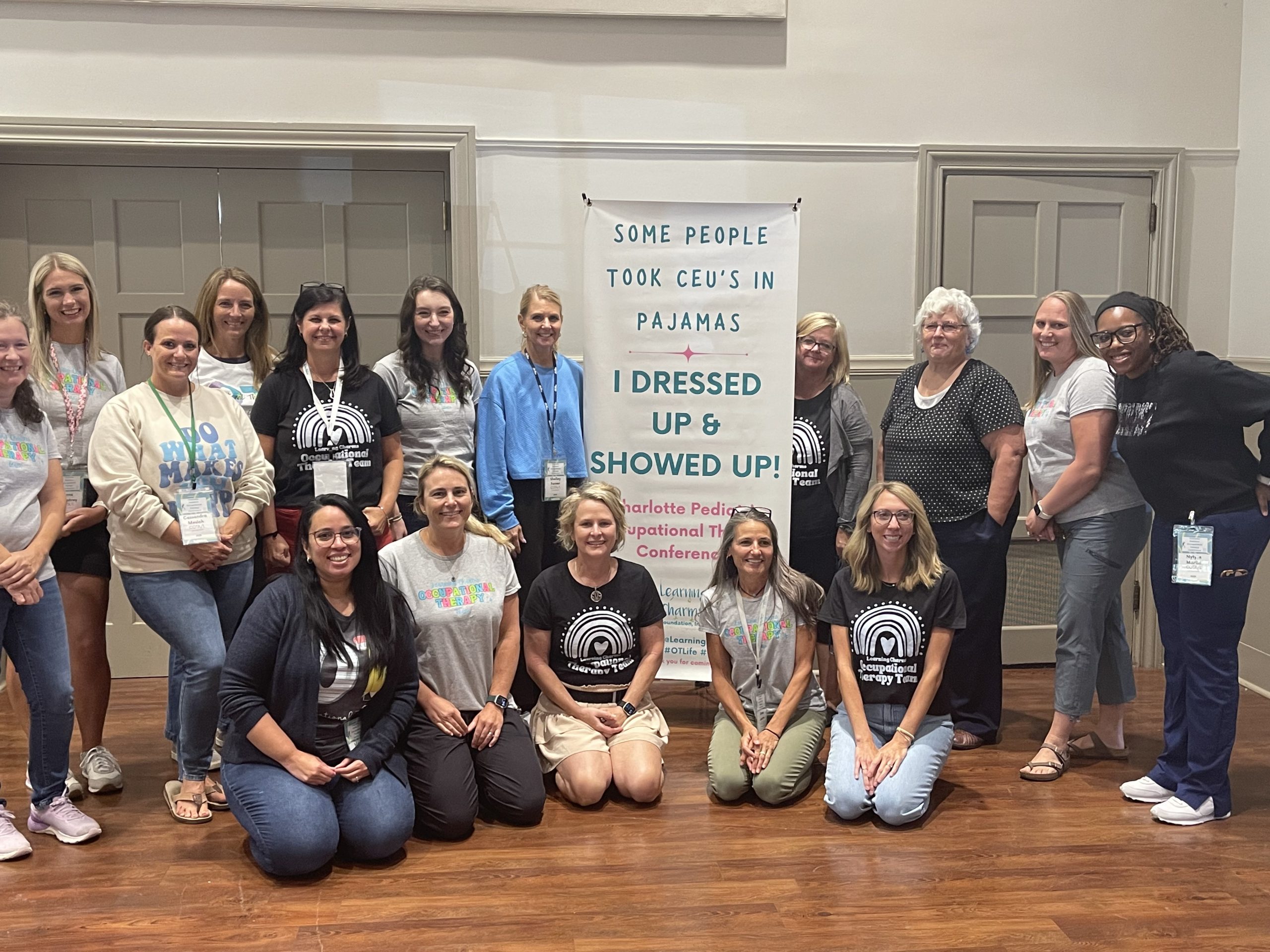
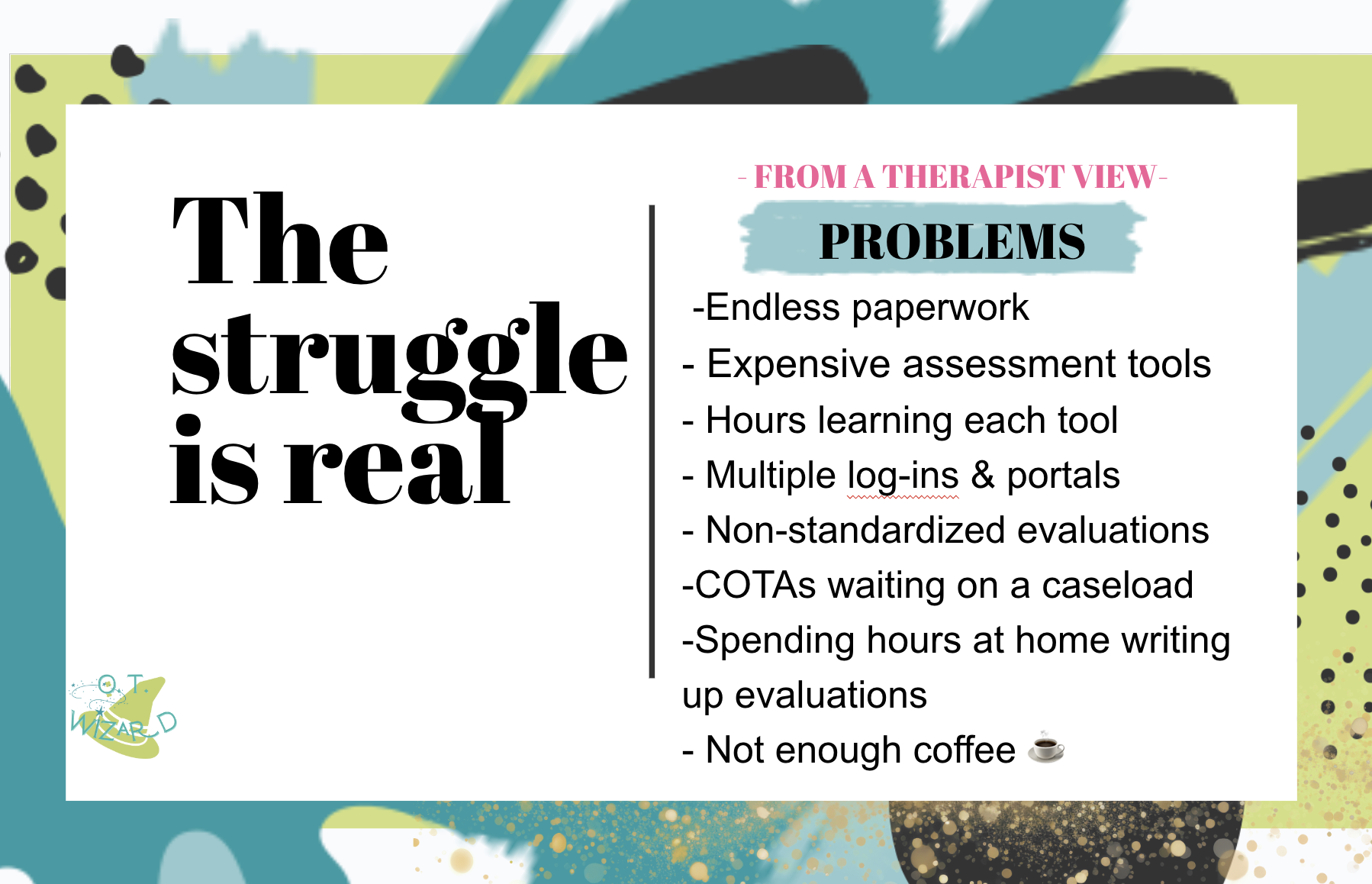
    There are a brand new batch of 43 new O.T. Wizards that were trained at the Charlotte Pediatric OT Conference this past week! It was great to meet the OTA’s and OT’s that attended the training. In the first 1.25 hours , we discussed the struggles and pain points.

    We had a 50/50 mix of OTA’s and OT/L’s with about 1/2 from clinics and the other 1/2 from either school systems or home health. I was able to show them how long this process has been in development.

    I spent a good amount of time explaining and answering questions about our past (FUNdamental Foundations ) and current scoring philosophy, including Rasch analysis (and plans for the future!).

    In the second part of the training, everyone created an account, added a “student” and then we created an evaluation together. I showed everyone how to administer some of the specialized assessments, including the WAND Preschool (pre-handwriting assessment), the Popping Bubbles (dexterity, speed and accuracy), and the scissor skills assessment.

    After the evaluation , everyone created their instant report. I think they were pleasantly surprised! I received lots of notes about how excited they are to start using the OT Wizard.

    Congratulations to our newest O.T. Wizards! 🪄

    💕Stephanie , Head O.T. Wizard

  • Revolutionizing Pediatric Occupational Therapy: Welcome to the Digital Age

    Revolutionizing Pediatric Occupational Therapy: Welcome to the Digital Age

    The landscape of pediatric occupational therapy is evolving rapidly, and with it comes the need for innovative solutions that streamline our practice without compromising the quality of care. As therapists, we’ve all experienced the late nights spent writing evaluation reports, the stacks of paper assessments, and the challenge of tracking progress across multiple clients.

    Enter the digital revolution in occupational therapy. Today’s OT practitioners are discovering that technology isn’t replacing the human touch – it’s enhancing it. By automating administrative tasks, we’re freeing up more time for what truly matters: working directly with the children who need our expertise.

    The Challenge We All Face

    Recent surveys of pediatric occupational therapists reveal a startling truth: most practitioners spend 1-3 hours writing up each evaluation. That’s time taken away from direct therapy, professional development, and yes, even work-life balance. The traditional paper-based system, while familiar, is becoming increasingly unsustainable in our fast-paced healthcare environment.

    Why Digital Tools Matter

    The integration of digital tools in occupational therapy practice offers several key advantages:

    • Standardized administration assessments ensure consistency across evaluations
    • Automatic report generation saves hours of documentation time
    • Data tracking enables evidence-based progress monitoring
    • Drastically reduces errors and oversights
    • Tracks multiple streams of child data into one synthesized report
    • Secure cloud storage protects client information while making it accessible

    Looking Ahead

    As we embrace these technological advances, we’re not just changing how we work – we’re transforming the entire therapy experience for our clients and their families. The future of pediatric OT is bright, efficient, and more impactful than ever.

    💕Stephanie , Head O.T. Wizard